Service

Myofascial Release

Hands-on soft-tissue work using sustained pressure. Discuss whether this approach fits your symptoms and goals.

About Myofascial Release

Fascia is connective tissue around muscles and other structures. Pain or restricted movement should be assessed rather than automatically attributed to fascia.

Myofascial release involves hands-on pressure or stretching of soft tissue. Research has explored symptom relief and function, but feeling better does not establish that adhesions were broken up or permanently changed.

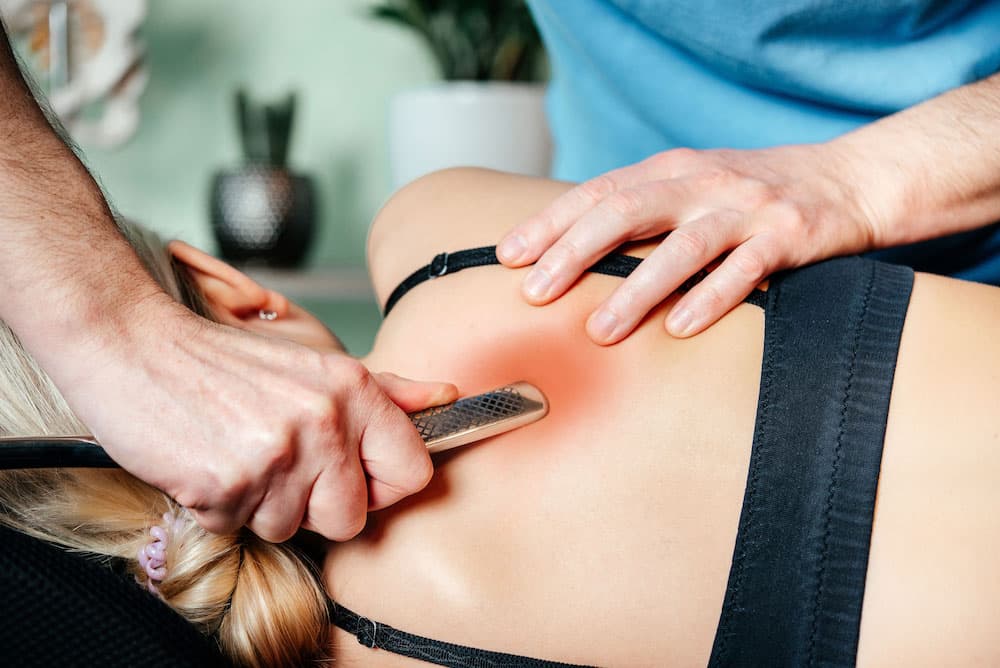
This page describes hands-on myofascial release. Graston Technique and other instrument-assisted soft-tissue mobilization (IASTM) use specialized tools and are distinct techniques; they should not be treated as interchangeable.

We use it most often on patients with chronic tightness, post-injury restriction, and movement patterns that haven't responded to other care.

Who this helps

  • Patients with chronic, stuck tightness that won't release
  • Post-injury or post-surgical scar tissue
  • Athletes with restricted motion limiting performance
  • Anyone with movement patterns that feel 'glued'

Your first visit

  1. 1

    Tissue assessment

    We palpate to identify the restricted layer.

  2. 2

    Sustained pressure

    Slow, deep work, different from rapid massage.

  3. 3

    Movement integration

    Active stretches incorporated to lock in the release.

Read the full first-visit walkthrough

Evidence & safety

Myofascial release: evidence and realistic expectations

A 2021 review of studies in adults with chronic low-back pain found possible improvements in pain and function. The authors described the evidence as preliminary because studies were small and had methodological limitations. Different techniques and limited long-term follow-up make broad promises about lasting results inappropriate.

Safety reporting was incomplete: several studies did not report adverse events, and increased pain was reported in one trial. Missing reports are not proof that treatment is harmless. NCCIH's broader massage guidance describes rare serious harms; it does not establish a myofascial-release-specific risk rate.

Sources and further reading

Real reviews

Patient experiences at our Tampa practice.

5.0
Google · 181+ reviews
I came across this practice while driving by and decided to schedule an evaluation. From the moment I walked in the office felt calm, welcoming…
Alexis JordanGoogle Review
Over the years, I've been to several chiropractic clinics, and honestly, most felt pretty generic. I never found one I wanted to stick with. That…
Robert EckelmanGoogle Review

Frequently Asked Questions

Often paired with

Symptoms we treat alongside Myofascial Release.

Ready to start with Myofascial Release?

$150 New Patient Exam · Dr. Romp & Dr. Soler · (813) 999-4007