Myovision sEMG Scan
A non-invasive measurement of paraspinal muscle activity used as an adjunct to the clinical exam.
What it is
The short version
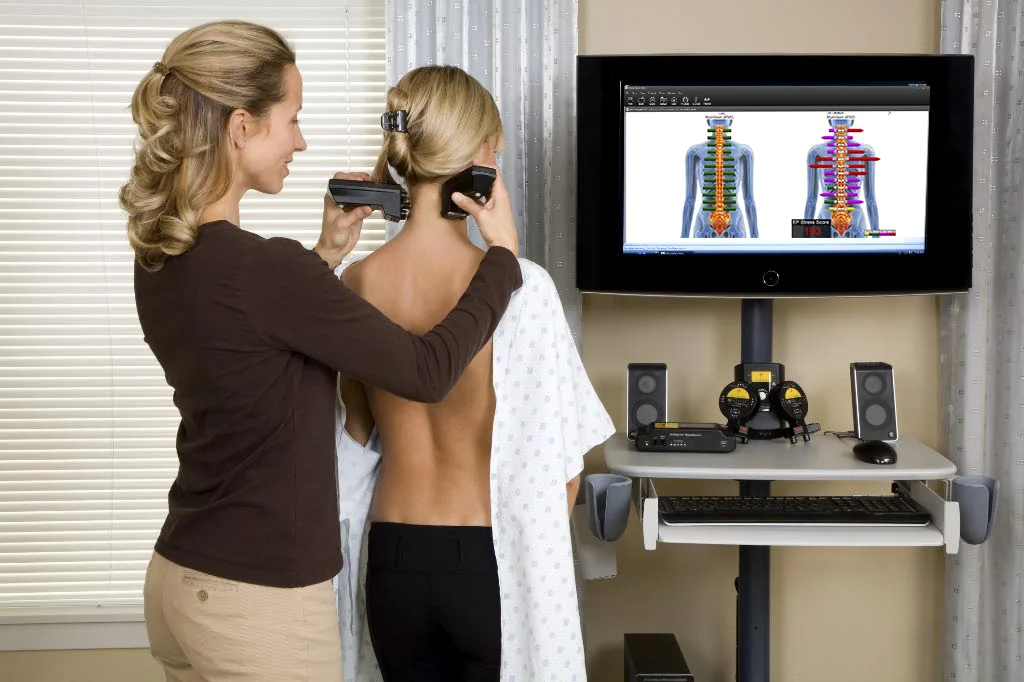
The Myovision surface EMG (sEMG) scan measures electrical activity from muscles along the spine using sensors on the skin. It does not diagnose the source of pain, nerve compression, or a specific neuromuscular disease on its own. When used, it is an adjunct to the history and physical examination, and results are interpreted with those findings and any other clinically indicated tests.
How it works
What to expect
- 01
Scan
A handheld sensor reads muscle activity along the spine.
- 02
Display
The system charts relative paraspinal muscle activity.
- 03
Interpret
Your doctor explains what the pattern can and cannot show alongside the clinical exam.
- 04
Reassess
If clinically useful, a later scan may be compared with the initial measurement.
Who it helps
Common reasons patients come in
- Unexplained or recurring spinal pain
- Selected patients where muscle-activity data may supplement the exam
- Paraspinal muscle-activity concerns
- Post-accident evaluation
- Patients being reassessed as part of a broader clinical evaluation
- Posture and muscle-tension concerns
Before care begins
Candidacy, limitations, and safety
- What it can measure
- Surface EMG measures electrical activity from muscles through sensors on the skin. It may supplement a clinical examination in selected cases.
- What it cannot diagnose
- It does not independently identify the source of pain, nerve compression, or a specific neuromuscular disorder and does not replace conventional electrodiagnostic testing.
- Referral
- Progressive weakness, muscle wasting, significant sensory loss, or other concerning neurologic findings require appropriate medical or electrodiagnostic referral.
The evidence
What the research shows
A 2008 AANEM review, covering studies from 1994 through February 2006, found limited evidence that surface EMG may detect neuromuscular disease, but insufficient evidence to identify specific disorders or distinguish nerve from muscle disease. It did not review pain or fatigue syndromes unrelated to nerve or muscle damage, so it is not a review of nonspecific low-back pain.
AANEM surface EMG review (2008): scope and diagnostic limitsMedical nerve-conduction studies measure nerve-signal transmission using electrical stimulation; needle EMG records muscle activity with a needle electrode. These differ from a skin-sensor sEMG scan.
MedlinePlus: EMG and nerve-conduction studies
Frequently Asked Questions
Start with the $150 new patient exam.
Includes digital X-ray, sEMG scan, doctor consultation, and a care plan you understand.
or call (813) 999-4007