Non-Surgical Spinal Decompression
Computer-controlled traction that may be considered as part of a conservative care plan.
When to seek emergency care
With back or leg symptoms, seek emergency care now for new difficulty passing urine or loss of bladder or bowel control, numbness around the genitals or anus, or severe or worsening weakness or numbness in both legs. Do not wait for a chiropractic appointment.
NHS: Sciatica warning signs and emergency assessmentWhat it is
The short version
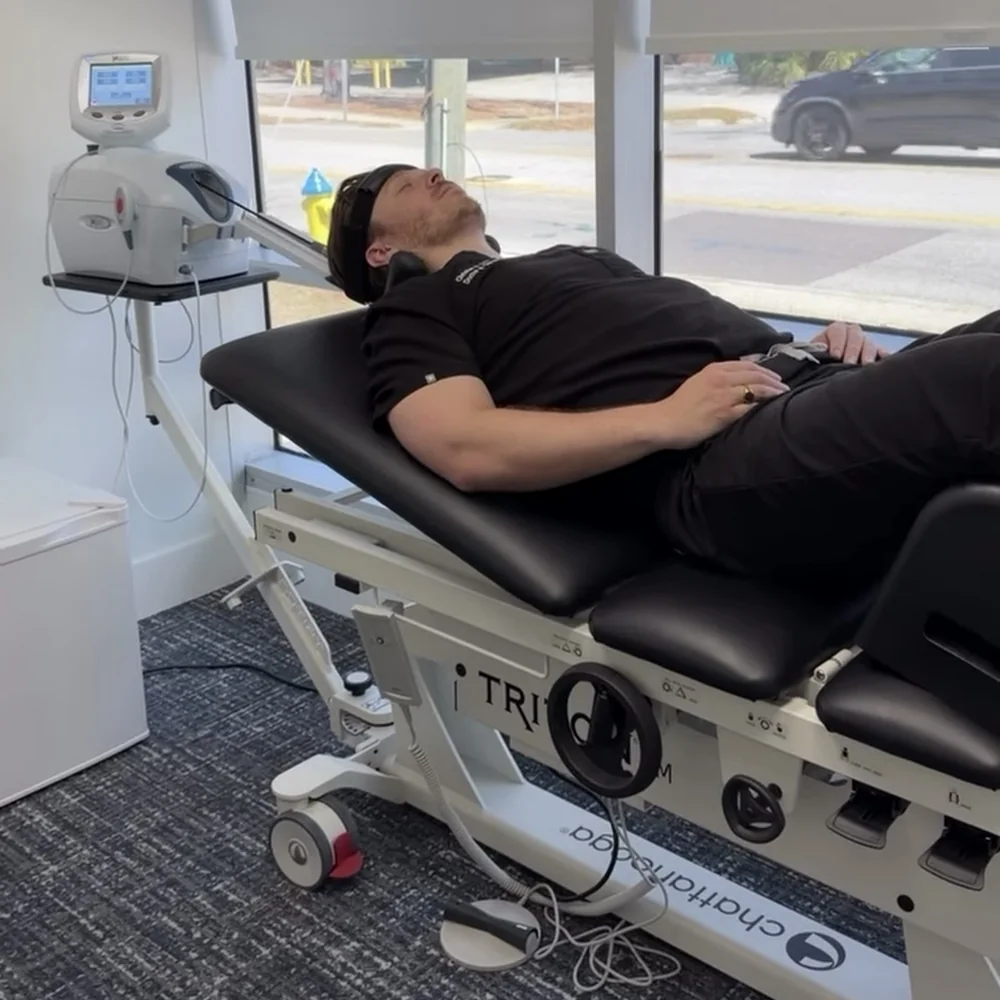
Spinal decompression here means motorized traction on the Triton DTS table, not decompression surgery. You lie fully clothed while the table applies controlled traction cycles. Evidence for traction in low-back pain and sciatica is mixed, so it is not appropriate for every patient and is considered only after a clinical evaluation. Imaging is ordered only when the history and exam indicate that it may change care.
How it works
What to expect
- 01
Evaluate
We review your history and exam; imaging is considered only when clinically indicated.
- 02
Position
You lie on the Triton DTS with a positioning harness. Tell the clinician if the position or harness is uncomfortable.
- 03
Decompress
The table applies slow, computer-controlled traction cycles.
- 04
Reassess
We track your response and refine the plan at each visit.
Assessment first
Concerns to discuss at an evaluation
These are concerns to discuss with a clinician, not proof that traction is suitable or effective for you. A diagnosis alone does not establish that decompression will help.
- Bulging or herniated discs
- Sciatica and radiating leg pain
- Degenerative disc changes
- Pinched nerves
- Chronic low-back pain
- Neck pain from disc compression
Before care begins
Candidacy, limitations, and safety
- Candidacy
- A clinician must first evaluate the diagnosis, neurologic findings, bone health, prior surgery, and other health conditions. Traction is not appropriate for every back or neck complaint.
- Limitations and response
- Evidence for traction is mixed, results vary, and improvement cannot be guaranteed. The service does not replace urgent evaluation, surgery when indicated, or another recommended level of care.
- Safety and referral
- Tell the clinician about pregnancy, fracture or severe osteoporosis, cancer, infection, inflammatory disease, recent surgery, or worsening weakness. Red flags prompt medical referral rather than decompression.
The evidence
What the research shows
NICE guideline NG59 recommends against offering traction for low-back pain, with or without sciatica. This is a recommendation against its use, not an endorsement of decompression. Discuss that guidance, other options and the uncertainty of benefit before deciding on care.
NICE: Low back pain and sciatica recommendationsMotorized table traction is different from lumbar decompression surgery. Surgery takes place in a hospital and may remove bone or part of a disc to relieve nerve compression; table traction does not perform that operation.
NHS: Lumbar decompression surgery explained
Frequently Asked Questions
More about symptoms and your first visit
Start with the $150 new patient exam.
Includes digital X-ray, sEMG scan, doctor consultation, and a care plan you understand.
or call (813) 999-4007